Church of England in the villages south and west of Cirencester Stream liveSafeguardingMagazinesContact
Thameshead Churches Watch live
Eco Church

Caring for God's earth, village by village

Looking after creation is part of our faith. Here is what Eco Church is, what is happening around us, what our churches are doing, and how you can play your part.

What is Eco Church?

A learning community for every church

Eco Church is a learning community of churches of all shapes and sizes, open to all denominations. It gives churches and their leaders a framework for taking practical action to care for God's earth, through the Eco Church survey.

Caring for the whole of creation is part of the work of the whole Church. It is one of the Anglican five marks of mission.

Eco Church, an A Rocha UK projectEnvironment, Diocese of Gloucester

The survey covers five areas of church life

  1. Worship and teaching
  2. Buildings and energy
  3. Land and nature
  4. Community and global engagement
  5. Lifestyle
Beyond the benefice

Part of something bigger

From our deanery to the worldwide Church, Christians are taking creation care seriously.

The Church of England and our diocese

Net zero by 2030

In 2020 Gloucester Diocesan Synod committed to building carbon reduction into everything the diocese does by 2030, in line with the national Church of England commitment.

The diocese won its Bronze Eco-Diocese award in February 2021 and is now working towards Silver.

Environment, Diocese of Gloucester
Cirencester Deanery

A Creation Care Plan

In October 2026 the Deanery Synod agreed to develop a Creation Care Plan which will:

  • speak with hope and urgency about creation care
  • encourage practical action across the deanery
  • encourage every parish to report each year on its progress
  • ask the Deanery Creation Care Committee to report each year to Synod
Our neighbours around the world

Letters from the Global South

The Letters from the Global South exhibition came to Cirencester Church in July 2026, and the deanery now has its own Creation Care team. The Cotswold MPs visited the follow-up exhibition, Our Mark, and invited it to the Houses of Parliament. Other churches and deaneries have asked to borrow it.

Children's climate plea heads to Parliament
Cirencester Deanery, 2025

Sustainable church flowers

In June 2025 our deanery Eco Church representative, Rosemary, led a Deanery Synod meeting on Eco Church. Beth Bruce Gardner, an ambassador for Sustainable Church Flowers, showed how to make church flowers biodegradable, local, seasonal and foam free, using wire coils and sand in place of florists' foam, and dried flowers, berries and grasses.

She explained the carbon footprint of imported roses and lilies, and encouraged churches to find other ways of remembering loved ones at Easter than the traditional Arum lily. A Sustainable Church Flower Show followed at Cirencester Parish Church in July 2025.
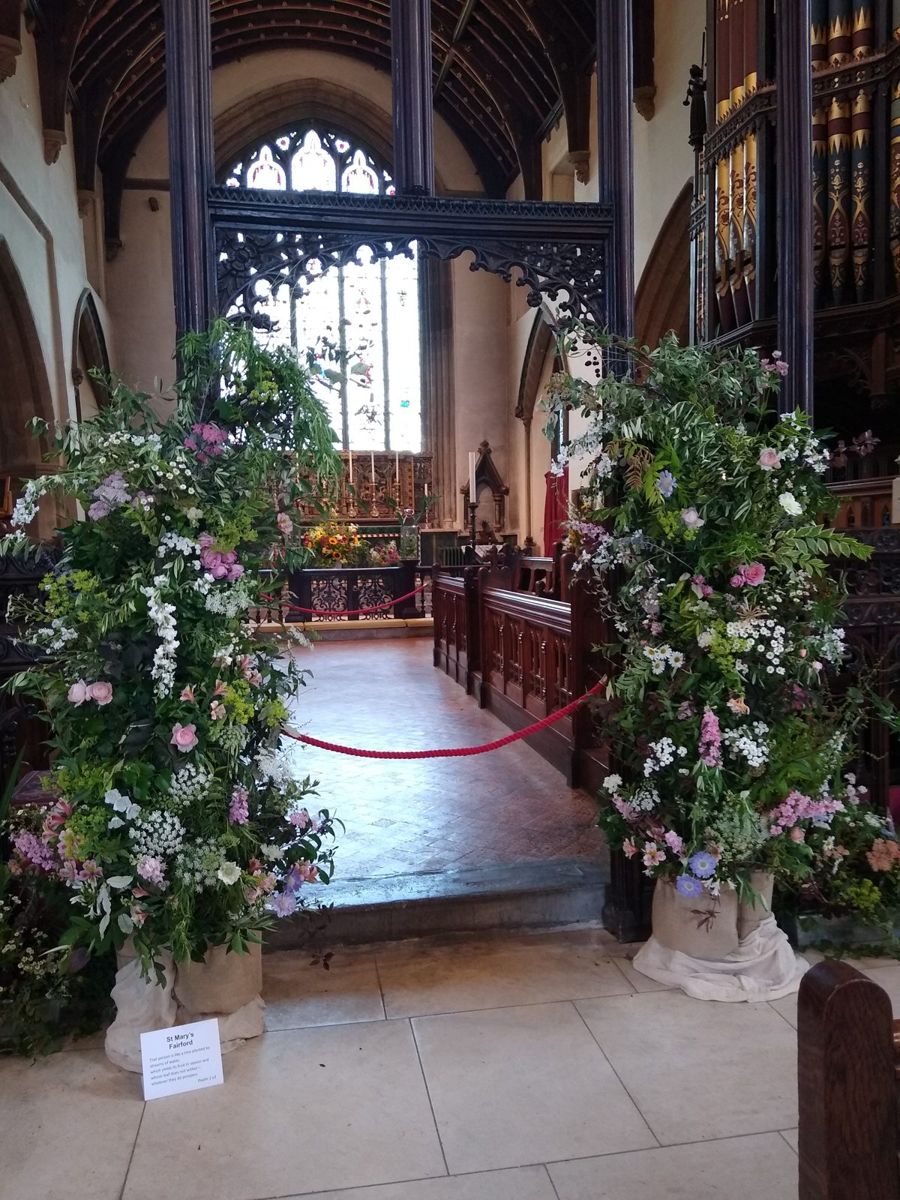
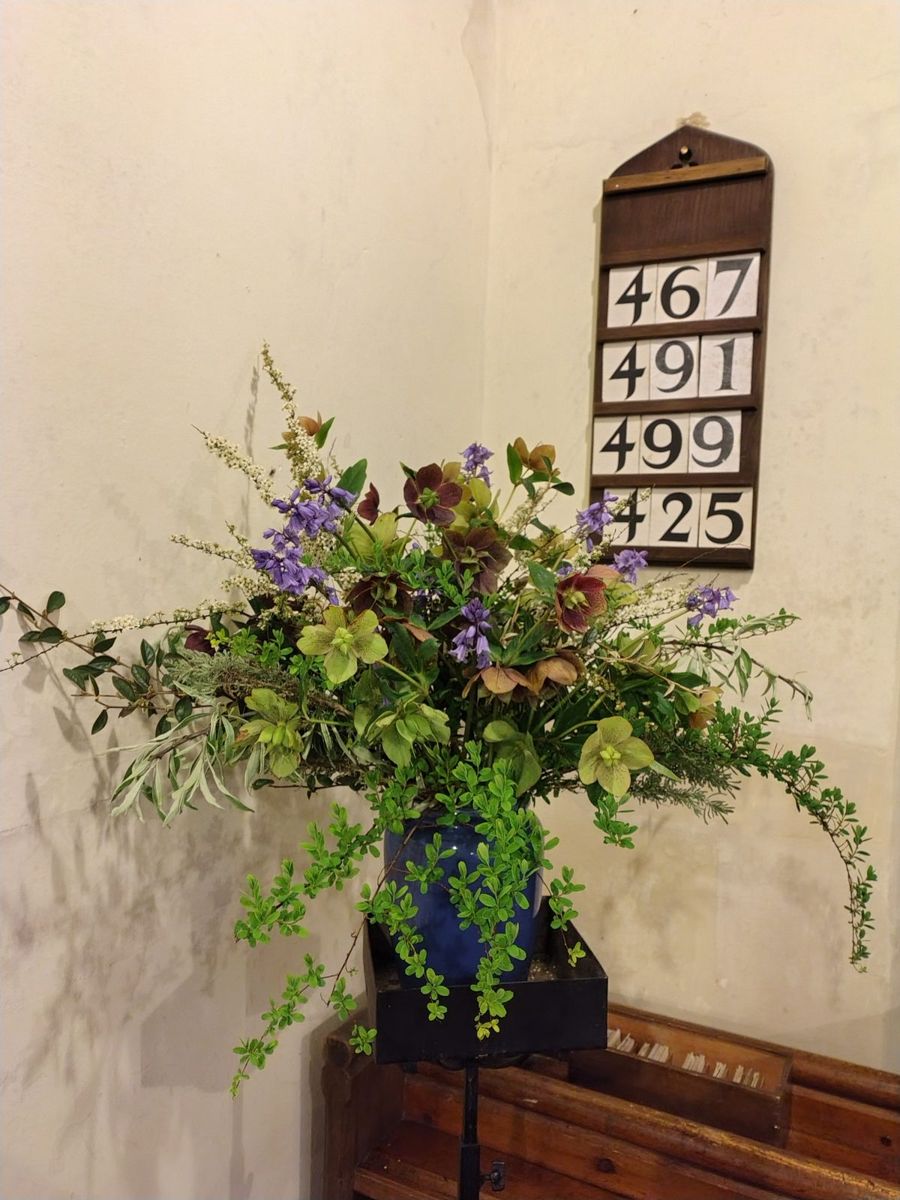
Flowers at the Sustainable Church Flower Show, Cirencester, July 2025
In our churches

What's happening in the benefice

Our churches care for God's earth in many ways: services that celebrate nature, harvest and Creationtide, flowers and greenery from close to home, tree planting, walks and outdoor worship, supporting organisations that share resources fairly, and helping our children and young people enjoy creation.

Poole Keynes

Flowers from close to home

The flower arrangers at St Michael and All Angels use flowers and greenery gathered locally.

Flowers and greenery at St Michael and All Angels, Poole Keynes
All Saints', Kemble

Kemble's journey

Kemble PCC signed up to Eco Church in October 2022. The survey showed a real strength in worship and teaching, and plenty to work on everywhere else.

We began simply: a regular Eco Church item in Parish News, and taking part in Love Your Burial Ground Week with Churches Count on Nature. In that first year we found and named 45 plant species and 11 animal species in the churchyard. We take part in No Mow May and have agreed a cutting plan with the Parish Council that leaves parts of the churchyard uncut until late summer.

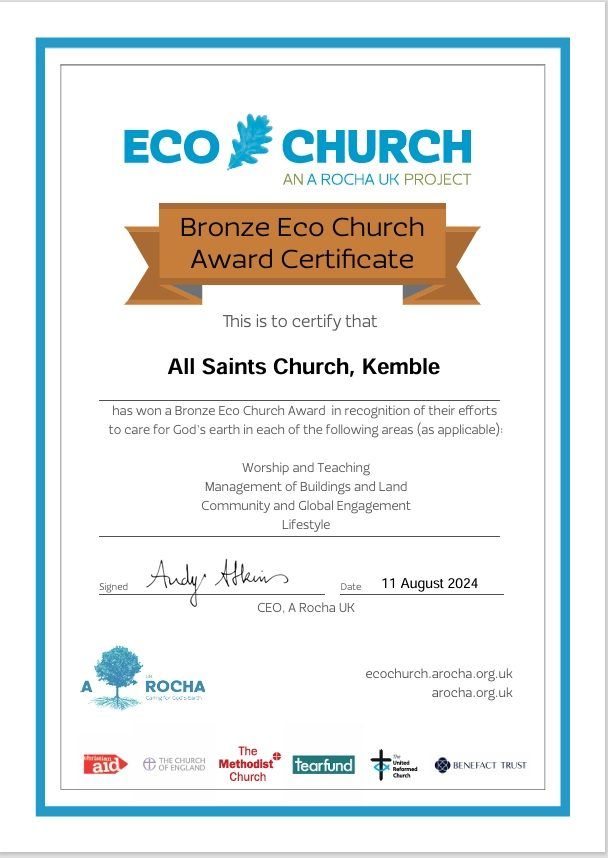
Kemble won its Bronze Eco Church award in September 2024 and is now working towards Silver.

Kemble's Bronze Eco Church award, 2024
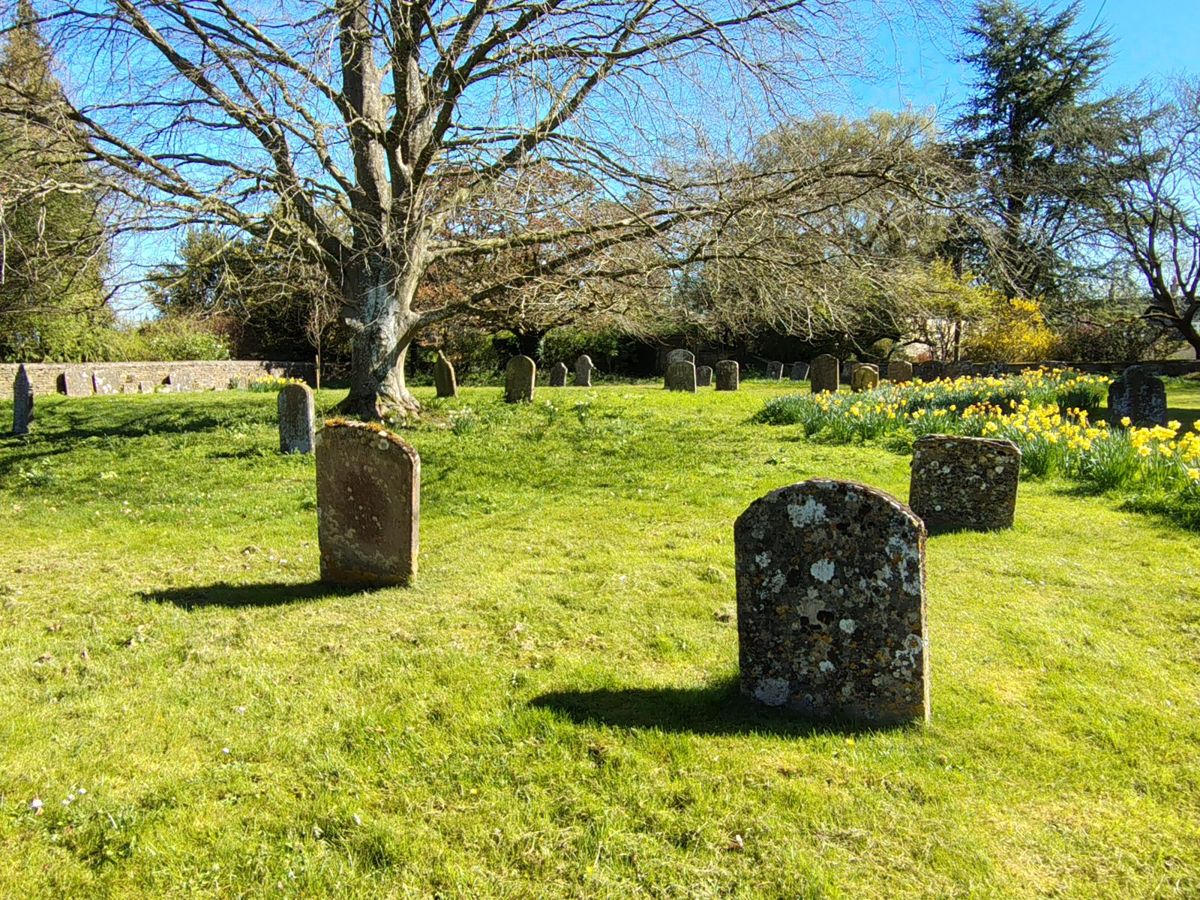
Kemble churchyard in spring
Kemble, every June

Churches Count on Nature

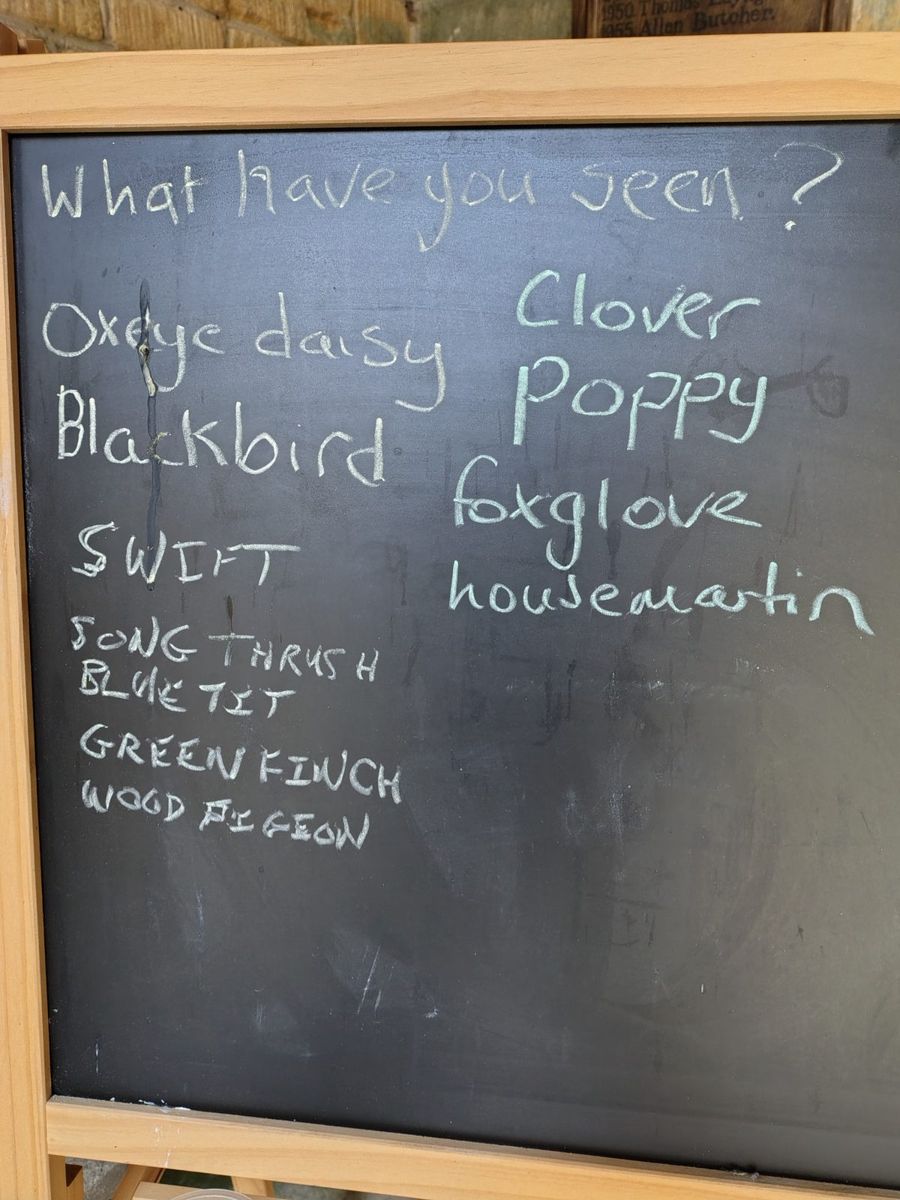
Each June we invite everyone to spend time in the churchyard and record what they see, with a blackboard and identification guides in the porch. The findings go into our churchyard wildlife log. We also encourage people to join the Big Butterfly Count in July and August.

See the churchyard wildlife log

What have you seen? The spotting board in the porch
Kemble, September 2025

Bugopolis

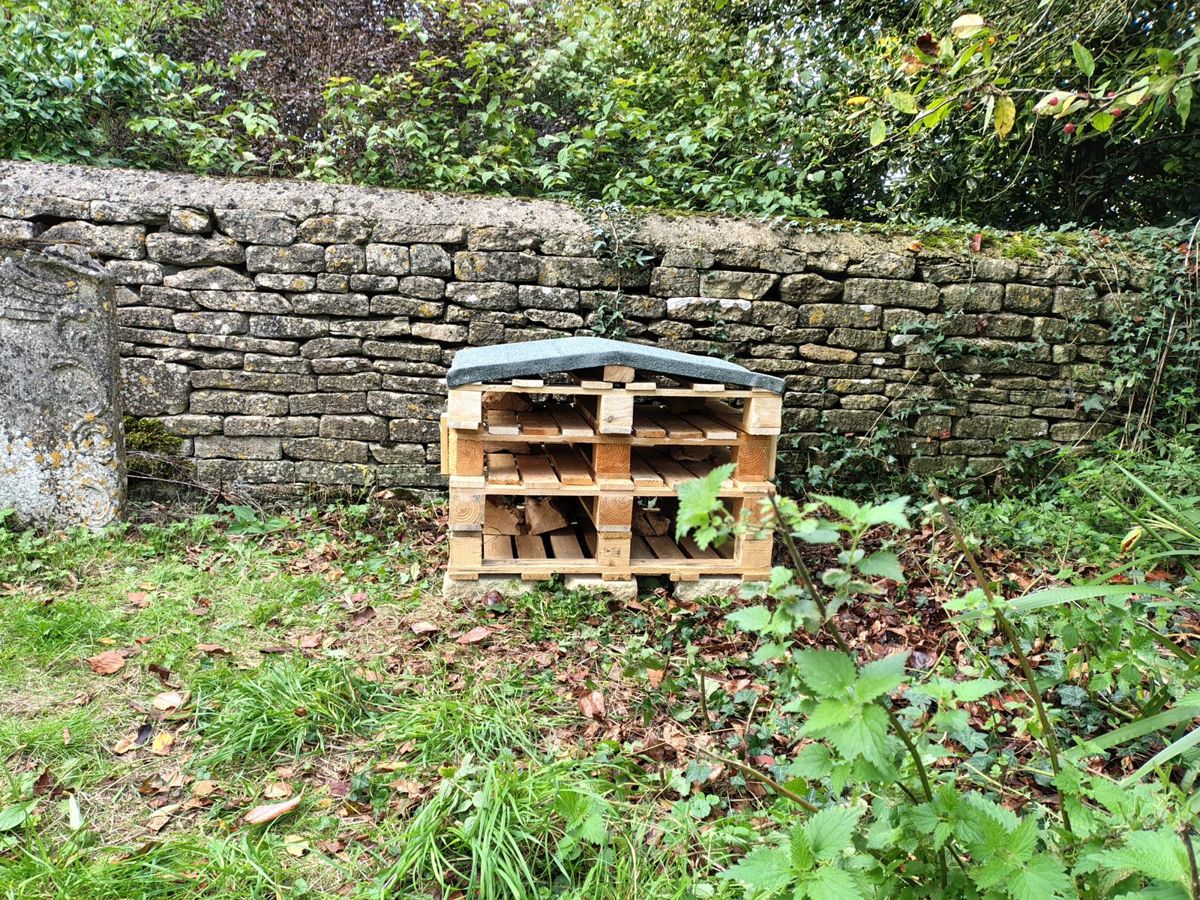
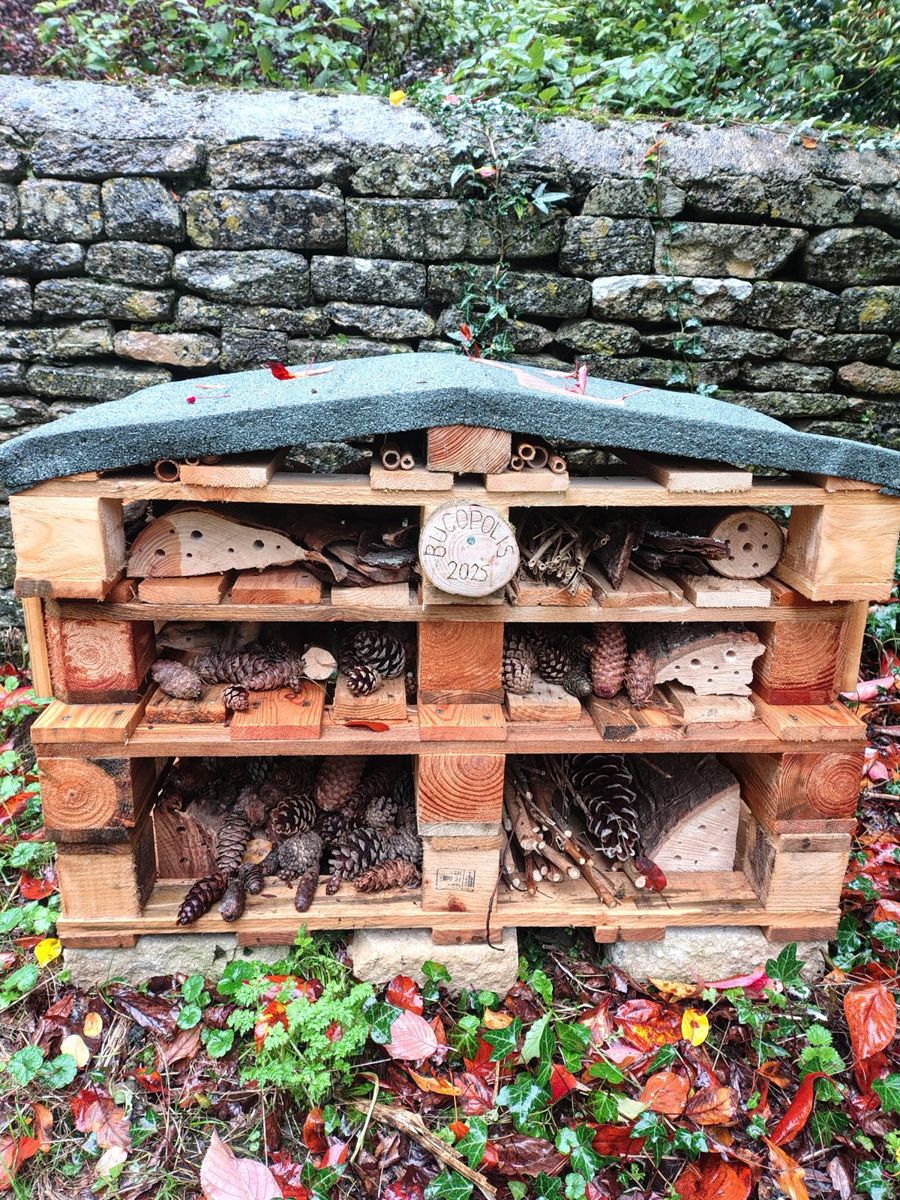
We built a bug house from reclaimed materials. At our Source service for Creationtide we filled it with logs, sticks and other materials to shelter insects and small animals through the winter. Bugopolis was the name everyone chose.

Building Bugopolis
Building Bugopolis
Bugopolis, ready for winter
Kemble churchyard

Our ancient yew

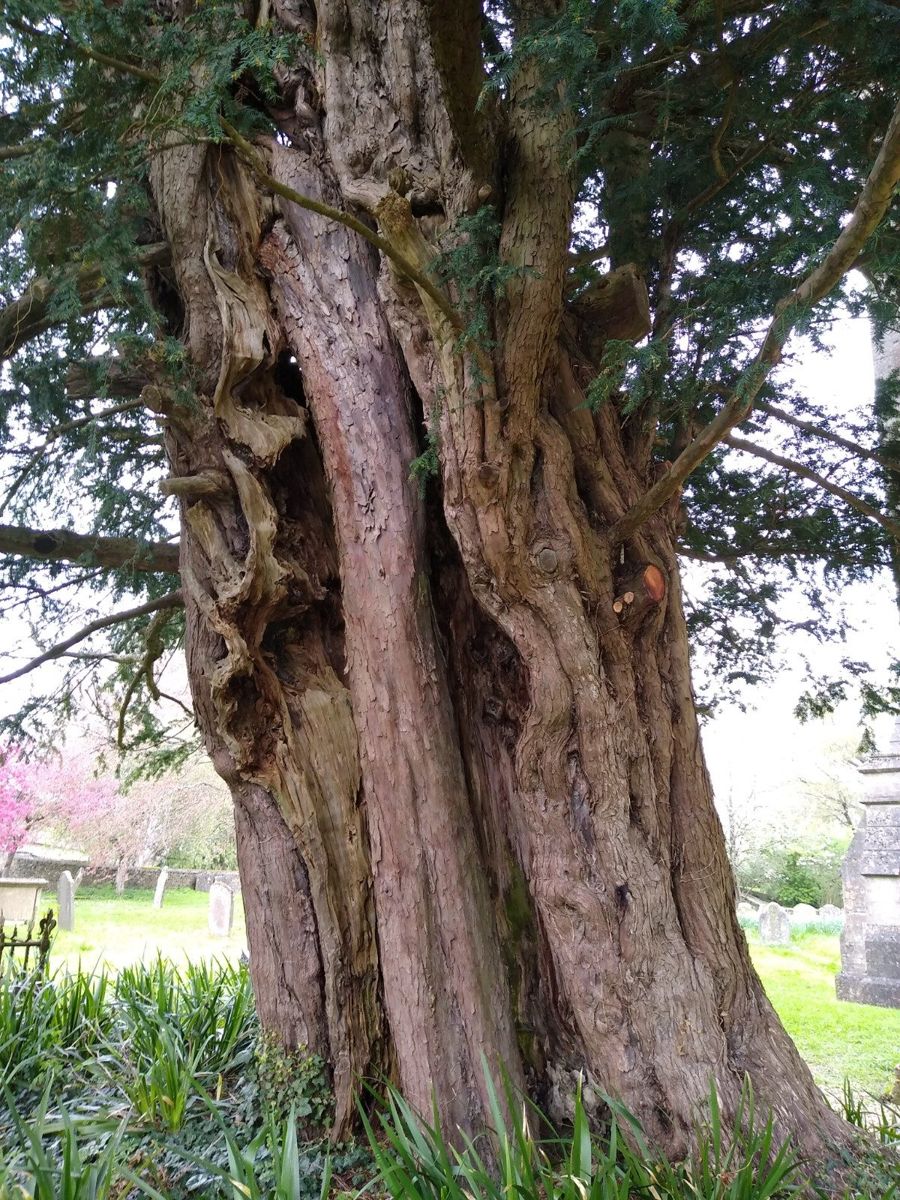
There are about 800 yew trees in the churchyards of England and Wales, and Britain is a world stronghold for veteran yews. Kemble's yew is thought to date from Anglo-Saxon times, perhaps from when land here was granted to the Abbot of Malmesbury in 682. Its centre is hollow, with a new tree growing inside, so it is hard to age, but with string, a tape measure and a yew age calculator we put it at between 1,000 and 1,300 years old.

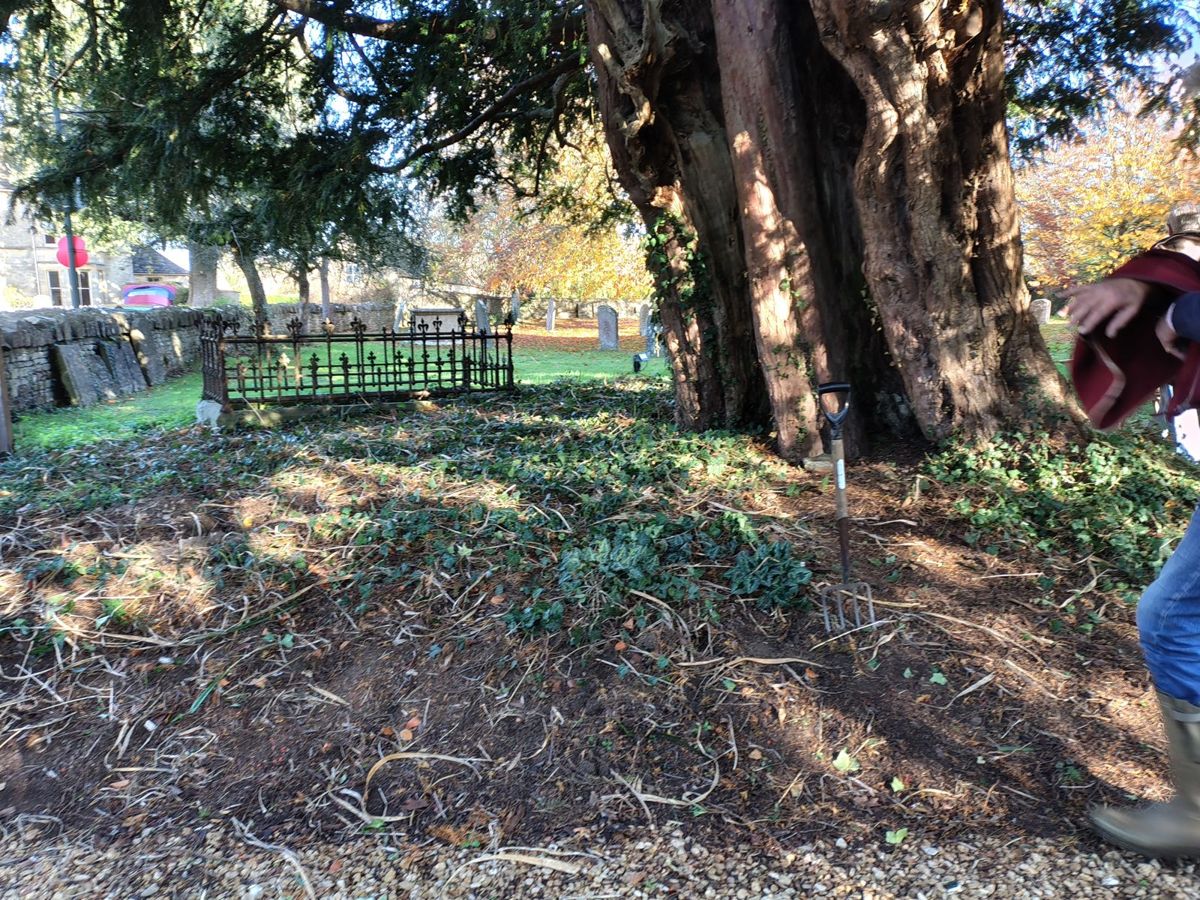
In November 2025 a working party cleared ivy, brambles and Lords and Ladies from beneath it, ready for Love Your Yew Week with the conservation charity Caring for God's Acre.

Caring for God's Acre

Kemble's yew, between 1,000 and 1,300 years old
After the working party, November 2025
Kemble, from February 2025

A sensory garden with Kemble Community Gardens

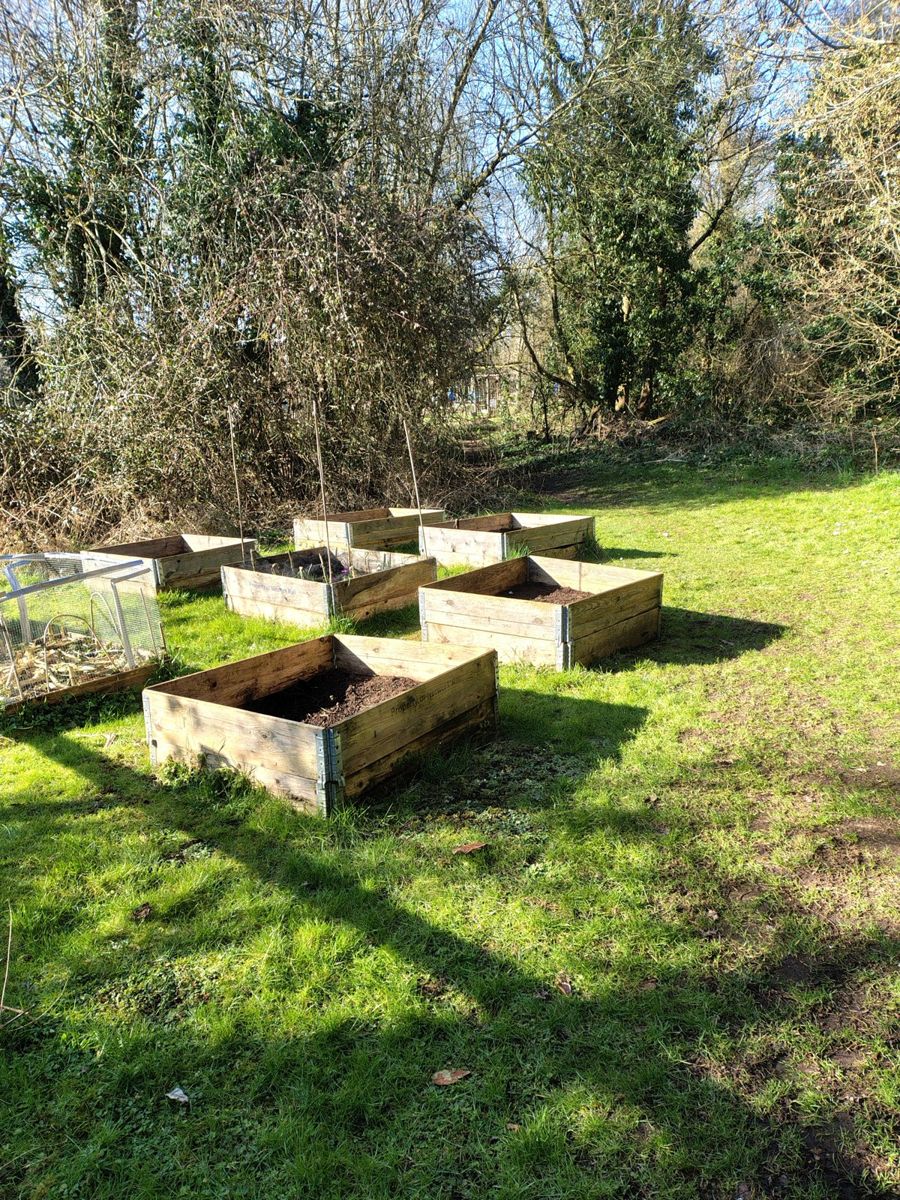
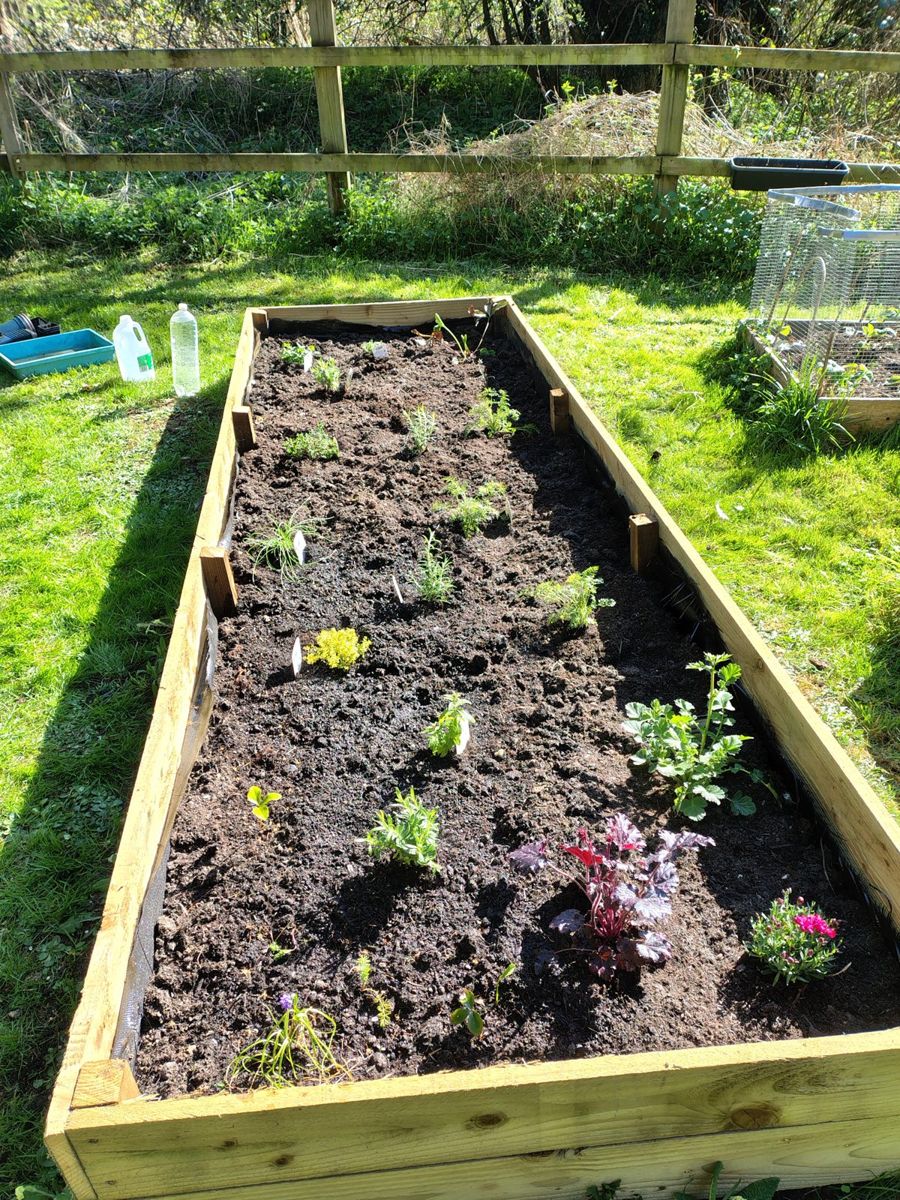
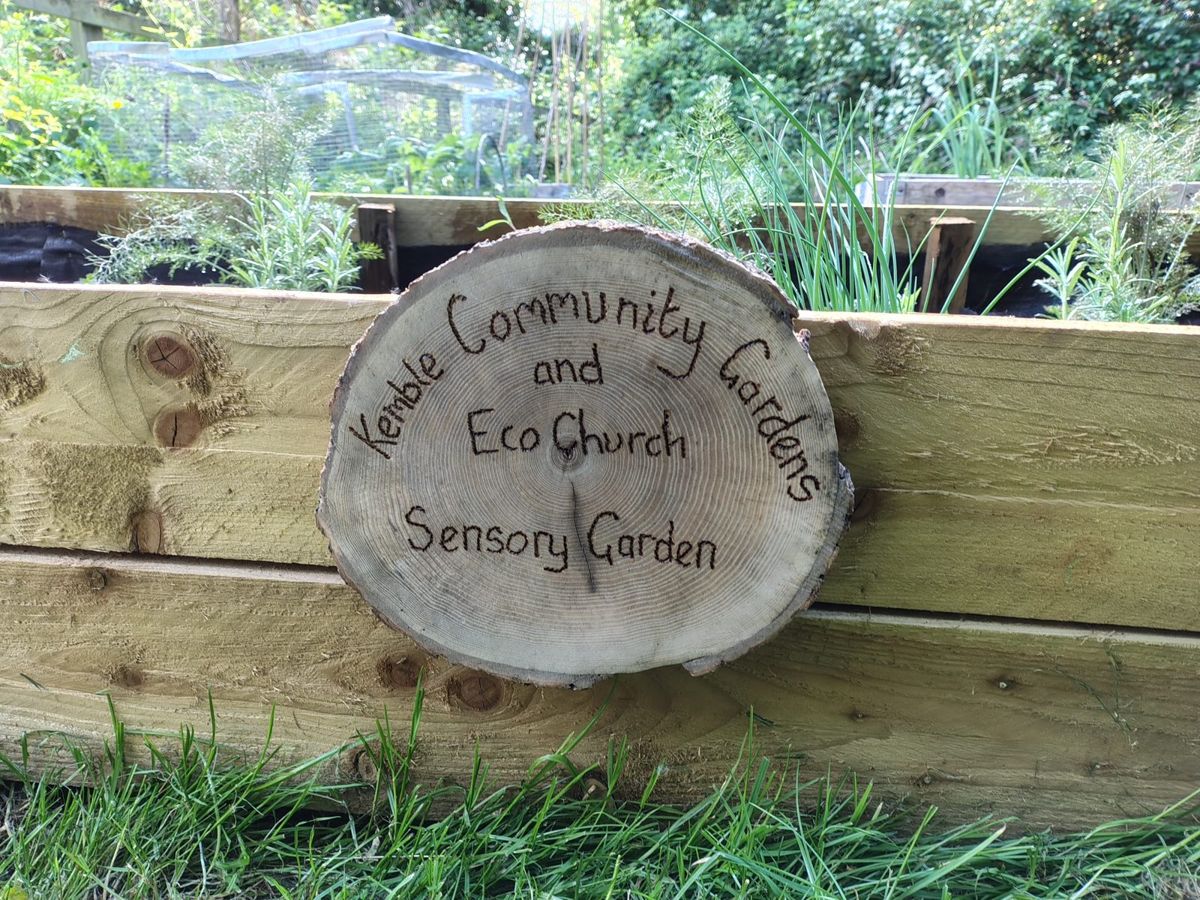
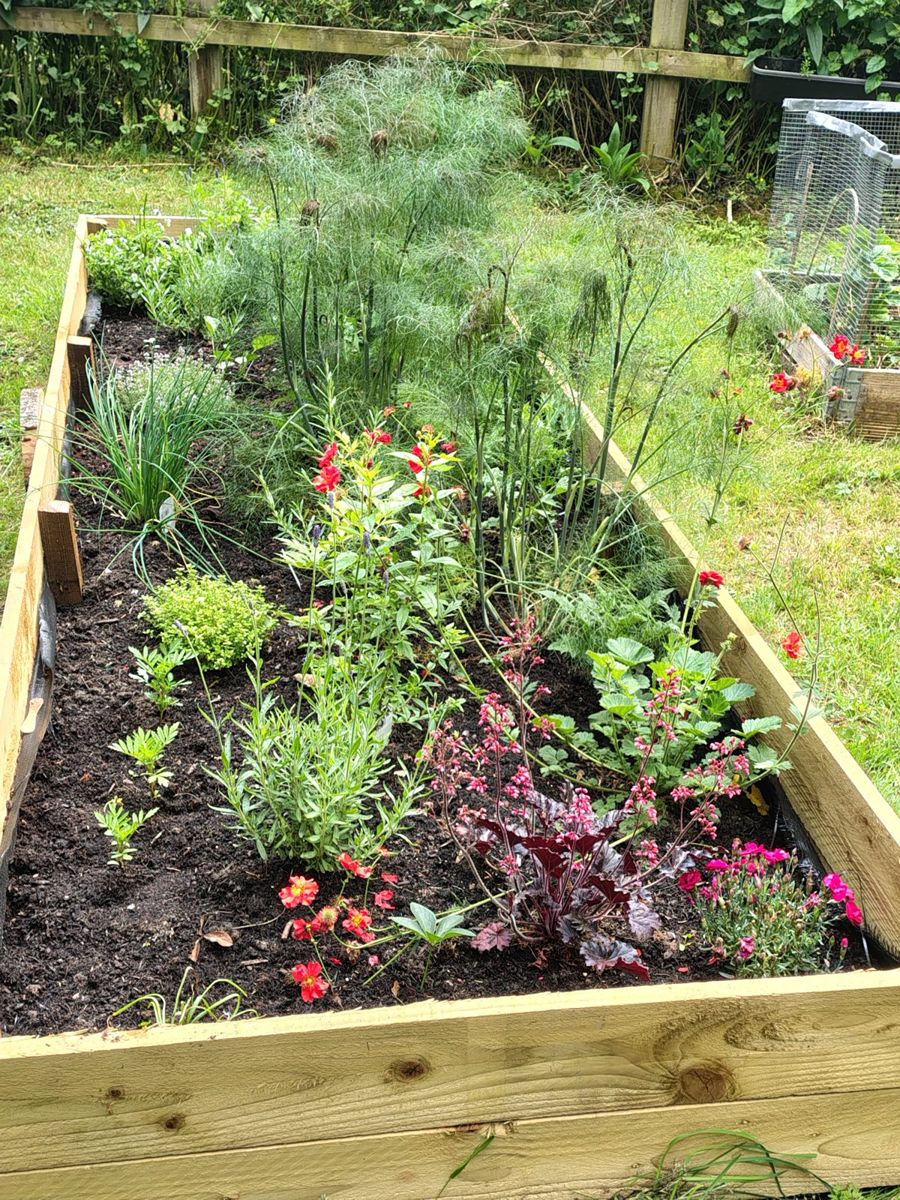
Kemble Community Gardens and Kemble Eco Church began a joint project to create a sensory garden. A larger planter went in in March, herbs and flowering perennials in April, then plants that are lovely to touch, like Sea Holly and Astilbe, and a sign so everyone knows what we are doing.

Over the summer it took shape, with a hot end and a cool end, and plenty of scent for bees, butterflies and other pollinators.

The site, February 2025
First planting, April 2025
The garden sign
The garden sign
In full bloom
In full bloom
Your church

Share your photos and stories

Whatever your church is doing for creation, big or small, we would love to show it here: a wildlife count, a flower display, a working party, a harvest idea. Send a few lines and a photo or two.

Ways to help

Small steps that add up

Practical help for greener living, most of it close to home.

Know your carbon footprint

The average carbon footprint around the world is about 5 tonnes of carbon dioxide a year, and twice that in the West. To keep warming below 2 degrees, we each need to get below 2 tonnes. The first step is knowing how big yours is and what causes it.

Mend it, don't bin it

The Repair Café meets on the second Saturday of every month, 10am to 1pm, at Cirencester Baptist Church. Volunteers repair your item for free. Last items are taken at 12 noon.

Reuse, recycle, swap

Swapping, donating and buying second-hand all help. The Waste Wizard finds local reuse, repair, recycling and disposal options for almost anything.

Warmer homes, lower bills

Warm and Well helps people who own or rent an inefficient home apply for grants for insulation, heating (including first-time central heating) and renewables such as solar panels and air source heat pumps.

Borrow, don't buy

Library membership is free and runs from your phone. Borrow books, magazines, eBooks and audiobooks, and from the Library of Things at Charlton Kings, tools for DIY and craft projects for a small fee.

Refill, cut the plastic

Take your own containers to a refill shop for soap, washing-up liquid and more. They sell household goods and gifts too.

  • Stroud Valleys Project Eco Shop, Threadneedle Street, Stroud
  • Loose, High Street, Stroud
  • The Wild Food Company, High Street, Malmesbury (on Facebook)

Sustainable flowers

For church, home or an event: local, seasonal and foam free. Flowers from the Farm can advise on weddings and funerals.

Care for your churchyard

Join a churchyard working party, help with the wildlife count each June, or look after an ancient tree.

Start at your church

Any church can join Eco Church and take the survey. Talk to us about getting your parish started.

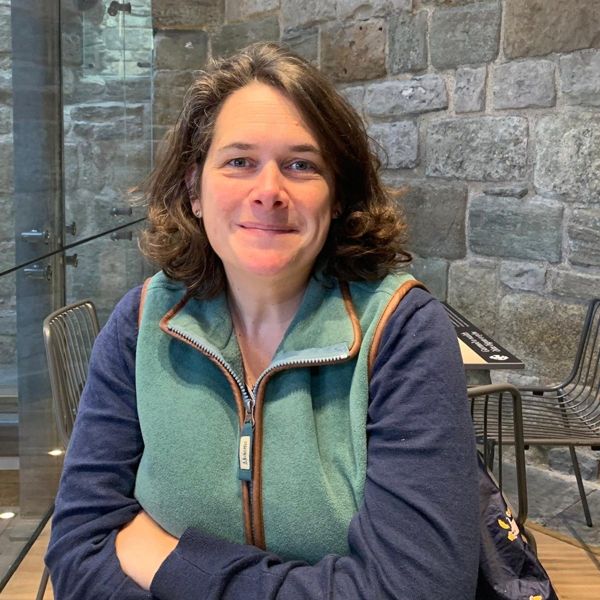
Toto Walls
Not sure where to start?

Talk to a real person

Whatever's on your mind, big or small, Toto in our office will make sure your message reaches the right person. We aim to reply within 72 hours.

Send us a message